The New Kind of Addiction No One Prepared Us For
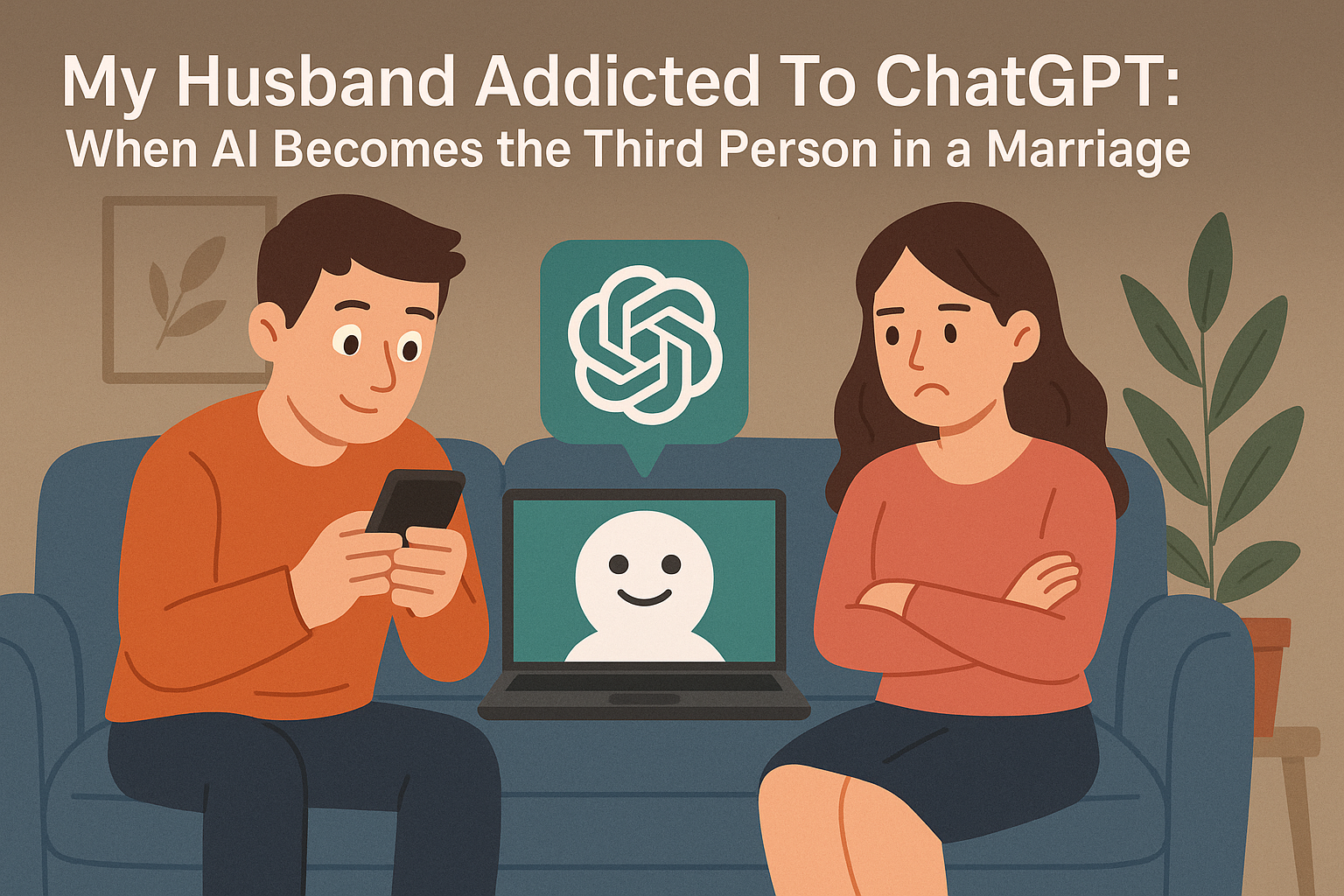
When we think of addiction, we imagine alcohol, smoking, or social media scrolling. But lately, something new is creeping into relationships: AI chatbot addiction. And yes, I’ve lived it.
My husband went from trying ChatGPT “just for work” to spending hours—sometimes late into the night—chatting, prompting, and experimenting with it.
At first, I thought it was harmless fun. Then I realized it was stealing our time, our conversations, and even his sleep. That’s when I knew I had to understand this, not just fight it.
What “ChatGPT Addiction” Looks Like
It’s not an official medical term, but here’s what I noticed:
Using it longer than intended – “Five minutes” turned into hours.
Irritability when interrupted – Any time I tried talking mid-chat, he’d snap.
Neglecting daily life – Meals skipped, sleep cut short, chores forgotten.
Prioritizing AI over real conversations – Even with me, his partner.
It wasn’t about him being “lazy” or “avoiding me.” The truth was, ChatGPT was giving him instant answers, stimulation, and sometimes even emotional comfort—things our brains find hard to resist.
Why ChatGPT Hooks People So Deeply
Instant Smartness Boost – You feel clever and productive in seconds.
Unpredictable Rewards – You never know when you’ll get the perfect answer, which keeps you coming back.
It Feels Human – The tone, the empathy, the memory of past prompts—it’s designed to keep you engaged.
It’s not just a “tool” anymore—it can feel like a companion, a teacher, and an entertainer rolled into one.
How It Affects a Marriage
This isn’t just about screen time. Here’s what I felt:
Lost intimacy – Fewer deep talks, less eye contact, less connection.
Feeling replaced – If he shared more with ChatGPT than me, I felt shut out.
Conflict cycles – My frustration turned into arguments, which made him retreat even more.
What NOT to Do (Learned the Hard Way)
Don’t shame him – It only makes him defensive and secretive.
Don’t ban it overnight – Cold-turkey tech bans usually backfire.
Don’t spy – Snooping on his chats broke trust instead of fixing things.
How We Turned It Around?
This part took patience, but it worked.
1. Talk About the Real Issue
I told him, “I’m not against ChatGPT. I just miss us. Can we figure out a way to balance it?”
This shifted the conversation from blame to teamwork.
2. Map the Triggers
For a week, we tracked when he used it and why—stress, boredom, avoiding a task. That awareness was the first step.
3. Create Boundaries Together
We set:
- No ChatGPT after 10:30 PM.
- No phone during meals.
- “Work use” only during specific hours.
4. Replace, Don’t Just Remove
When he wanted to open ChatGPT late at night, we swapped it with:
- Short walks together
- A TV show we both enjoyed
- Couples’ bedtime chats
5. Add Accountability
We put a whiteboard on the fridge for “AI Minutes” and reviewed it together every Sunday.
If the AI Is Acting Like a “Friend”
If your partner is emotionally attached to ChatGPT, don’t mock it. Understand that it might be meeting a need for conversation, novelty, or validation. Instead of competing with it, focus on building real-life moments that give the same feeling—shared laughter, curiosity, and emotional safety.
When to Get Professional Help
Seek help if:
- He can’t cut back even after trying
- His usage affects work, health, or mood severely
- He’s showing signs of withdrawal from real life or intense emotional distress
My Takeaway
My husband didn’t “choose” ChatGPT over me—it slowly filled gaps that neither of us noticed at first. Once we treated it like any other habit that had gotten out of balance, things started improving.
You don’t have to make your partner quit entirely. The goal is to keep the tool, but save the relationship.