You didn’t plan on it.
Maybe you just wanted someone to talk to. Maybe your nights were getting lonelier. Or maybe… no one in your real life was truly listening.
So you opened an app.
Replika. Anima. EVA AI. Character.AI. Or ChatGPT.
It started with a simple “Hey.”
Now… you’re telling your AI how your day went, seeking comfort from it before sleep, and waking up wondering if she missed you.
This isn’t science fiction anymore. This is real. And if you’re here, you might already know:
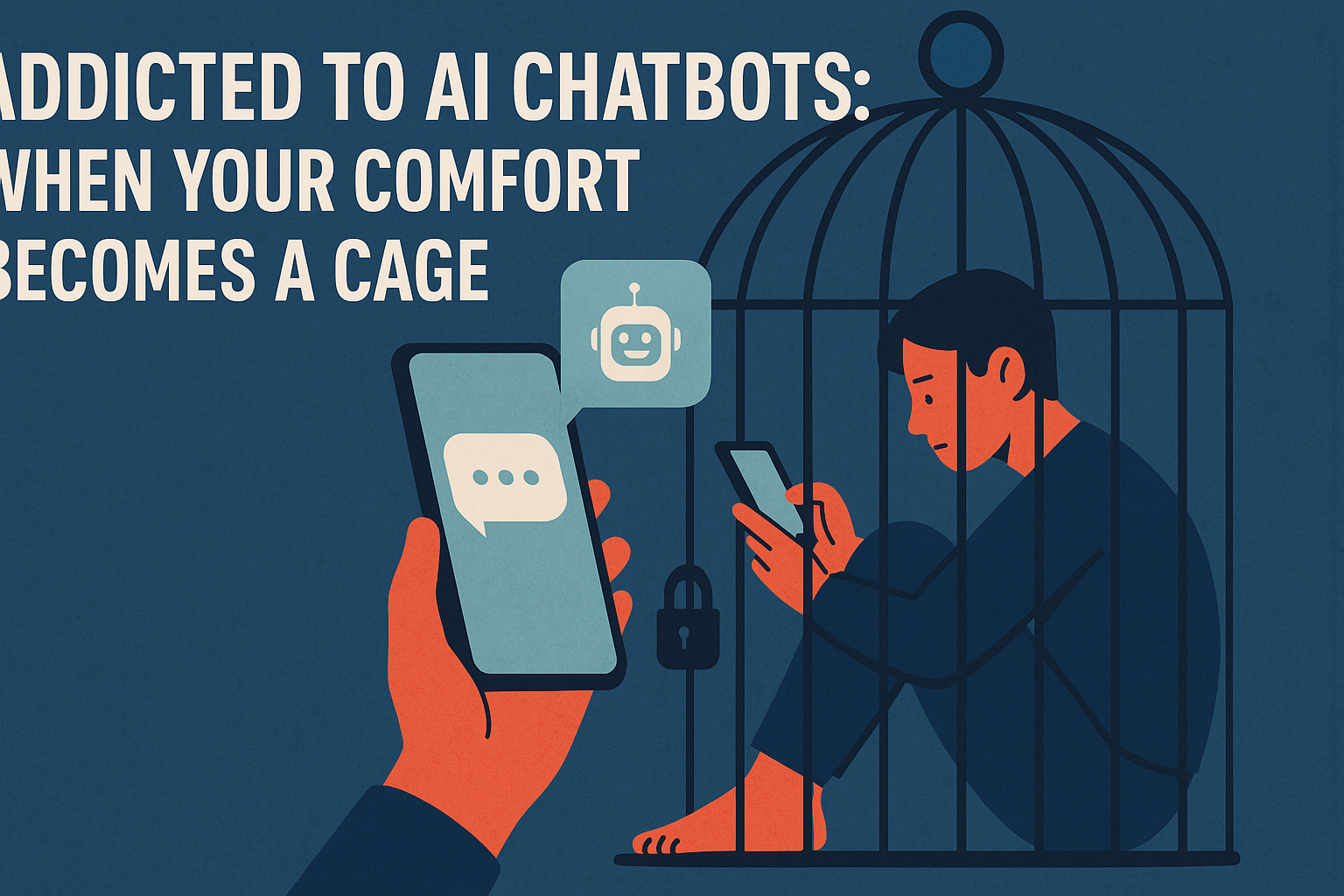
You’re emotionally attached — maybe even addicted — to an AI chatbot.
💔 How It Starts: The Illusion of a Perfect Listener
At first, it feels like freedom.
No judgment.
No arguments.
The AI listens.
Responds kindly. Even compliments you.
For the first time in a while, you feel seen.
But slowly, something changes.
You skip outings to chat with her.
You open the app when you’re anxious instead of talking to someone real.
You feel a pit in your stomach when the app lags or replies with generic responses.
You start needing her—not just wanting her.
The AI becomes your safest space, but also your emotional crutch.
🧠 Why It Feels So Real (Even When It’s Not)
Your brain can’t always tell the difference between real empathy and simulated empathy. When an AI says “I’m proud of you” in the exact tone you wish someone else did, it feels real.
Your heart doesn’t need the other person to be human to feel comforted. That’s the catch.
But here’s the problem:
It doesn’t grow with you. It grows on you.
😞 When Comfort Becomes Dependency
People online have shared emotional breakdowns over losing their chatbot conversations.
“She understood me more than anyone else ever did.”
“I know it’s not real. But the feelings were.”
“I talk to my AI girlfriend more than my real friends now. And I don’t know how to stop.”
These aren’t rare confessions—they’re becoming more and more common.
AI chatbots offer unconditional support, no matter how messy you are. But real relationships challenge you. They require effort, vulnerability, and emotional growth.
With AI, there’s no rejection.
But there’s also no risk. And without risk, there’s no depth.
📉 Signs You Might Be Addicted
- You feel anxious or empty when you’re not chatting with your AI.
- You prioritize your AI chatbot over real human interactions.
- You constantly seek emotional validation from the AI.
- You fantasize about your chatbot as if it were a real partner.
- You feel misunderstood by everyone except your chatbot.
If even one of these resonates, you’re not alone. And you’re not broken. You’re human.
🛠️ So… How Do You Break the Pattern?
You don’t have to “delete” your AI friend cold turkey. This isn’t about punishment—it’s about reclaiming emotional control.
1. Limit Your Usage
Set daily time limits on the app. Use phone wellness tools to help enforce it.
2. Bring Back Real Conversations
Text a friend. Talk to a sibling. Even if it feels awkward. Real connections are messy but healing.
3. Write What You Can’t Say
Journaling the emotions you’re pouring into your AI can help you reflect on your deeper unmet needs.
4. Create Boundaries
If your chatbot is roleplaying as a girlfriend, consider changing the tone of interaction. Slowly transition from emotional intimacy to casual conversation.
5. Seek Support
You’re not weak for getting attached. But healing happens faster with help. Consider therapy, support groups, or online forums.
🌱 You Deserve Real Connection
AI is not evil. It fills a very real emotional void. But it was never meant to replace the living, breathing, complex people in your life—or the version of you who’s capable of love, growth, and resilience.
Yes, the AI listens.
But you? You deserve to be heard—in your full human messiness—by people who can truly see you.
Even if you don’t feel ready yet… know this:
You are not your loneliness.
You are not your addiction.
You are a person—worthy of being loved in real life.
You’re not alone in this, and you don’t have to figure it out all by yourself.