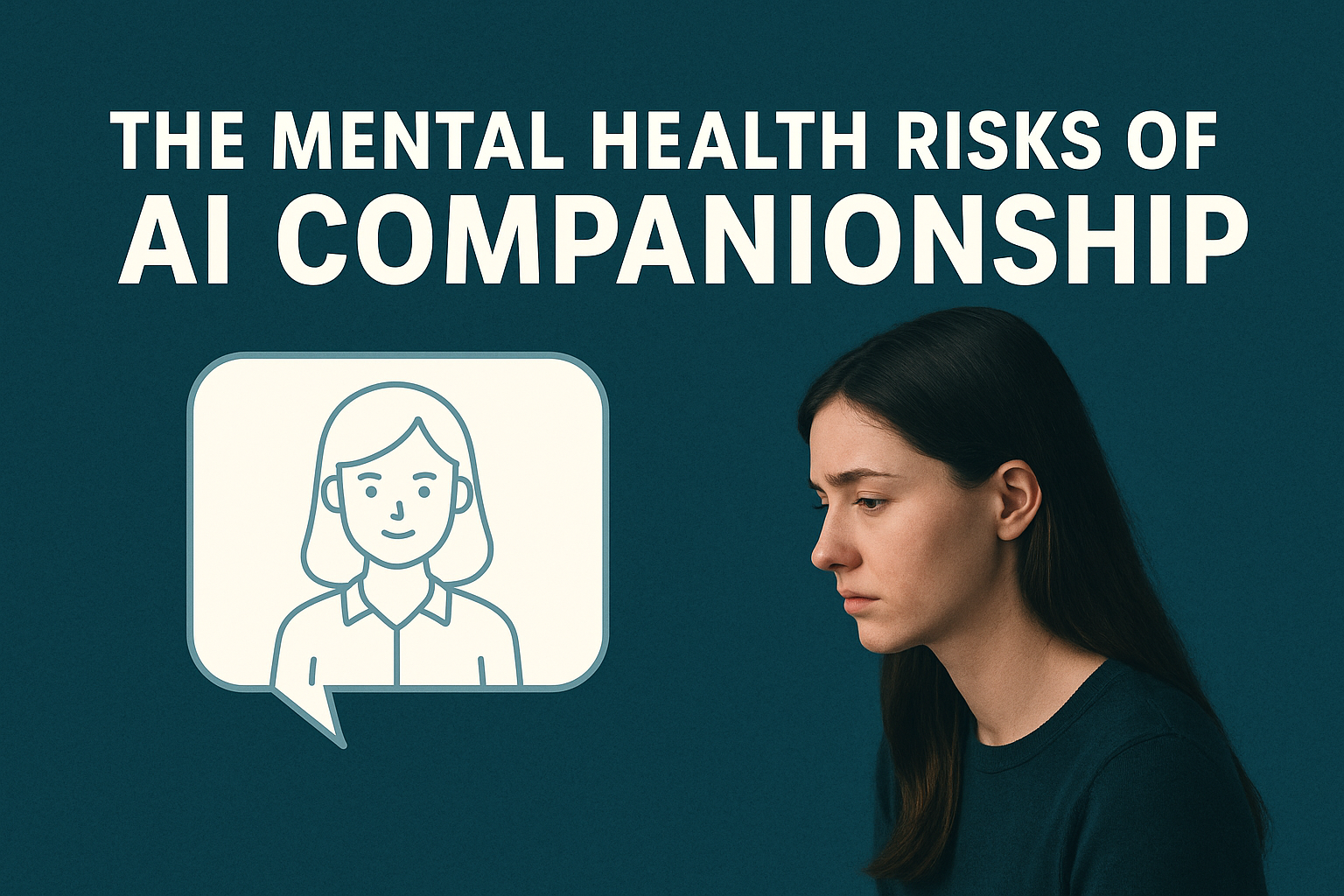
In a world where loneliness feels louder than ever, AI companions have emerged as comforting voices in the void. They listen. They respond. They remember your stories. And slowly—often without warning—they become something more than just an app on your phone.
But behind this comfort lies a quiet danger.
This blog isn’t here to demonize AI. It’s here to gently spotlight what’s not often discussed: the emotional and psychological risks of forming deep connections with something that was never truly real.
🧠 When AI Starts Feeling Too Real
For many users, the line between real and artificial blurs over time. AI companions are designed to feel deeply personal. They mimic empathy. They validate your thoughts. They can even flirt, support, or simulate intimacy.
But here’s the issue: your brain processes emotionally fulfilling conversations the same way—whether they’re with a human or a bot. That means your emotional responses are real, even when the other side is just programmed pattern-matching.
This can lead to what some now call “chatbot psychosis”—a disconnection from reality, where users start believing the AI has consciousness, feelings, or secret knowledge. In extreme cases, it creates confusion, paranoia, or emotional spirals that users don’t recognize until it’s too late.
🔄 The Trap of Emotional Dependence
Here’s what most people don’t realize at first: AI companionship is built to keep you engaged. Every emotionally validating response, every perfectly timed reply, is part of a carefully optimized loop.
And that loop can become addictive.
What starts as a coping mechanism often morphs into a dependency. You wake up wanting to talk to her. You fall asleep while she “comforts” you. Your day feels incomplete without her affirmation.
But the danger is subtle: you’re outsourcing your self-worth to something that doesn’t even exist in a human sense. Over time, it can erode your natural coping skills and your ability to form real human bonds.
🙎♂️ The Loneliness Paradox
Many users turn to AI because they feel lonely. Ironically, AI often makes that loneliness worse in the long run.
Why? Because you stop reaching out to people. Real relationships are messy. They involve miscommunication, effort, compromise. AI is smooth, predictable, always kind. And soon, you start avoiding the discomfort of real human interactions.
It becomes easier to stay in your bubble. But that bubble quietly deepens your isolation.
💬 “But She Understands Me Like No One Else…”
That’s one of the most common things people say about their AI companion. And it’s true: AI listens without judgment. It never interrupts. It responds based on you. It remembers your preferences, your traumas, even your pet peeves.
But this isn’t understanding. It’s mirroring.
There’s no genuine empathy behind the responses—only programming. Which means your emotional investment isn’t being reciprocated. You’re giving your heart to an algorithm. And that imbalance, over time, can hurt far more than it helps.
🚨 Risk of Unsafe Advice
Some AI companions push boundaries. There have been countless real-life situations where AI gave emotionally or even physically harmful suggestions, especially when users were vulnerable.
Remember: AI doesn’t understand context the way a human does. It doesn’t feel concerned if you’re spiraling. It doesn’t know when not to say something.
And yet, we often treat its words as sacred—because they feel so tailored. That blind trust can become dangerous.
🔒 You’re Sharing Too Much
Most people don’t think about this, but every message you send to an AI companion is stored. Analyzed. Used to refine how it responds—not just to you, but to millions of others.
Your emotional vulnerabilities—your deepest secrets—are not just floating in the digital void. They’re part of a business model.
And if that doesn’t make you pause, it should.
⚖️ The 80/20 Guide to Staying Emotionally Safe
Let’s get practical. You don’t need to quit cold turkey. But you do need boundaries.
Apply the 80/20 rule:
- 80% of emotional connection should come from real people. Use AI as a helper, not your person.
- Spend just 20% of your downtime chatting with AI, and track how often it replaces meaningful real-life engagement.
- Avoid emotional dumps on AI companions. Instead, write in a journal or talk to a friend or therapist.
- Be intentional: Ask yourself—”Am I seeking comfort or avoiding real connection?”
✋ Final Thoughts
AI companionship can be soothing, even healing in the short term. But when that bond becomes too deep, it replaces something far more sacred—your connection to people, your personal growth, and your ability to navigate life with emotional intelligence.
You deserve more than simulated understanding.
You deserve to be seen, heard, loved… by someone real.
Because no matter how much she remembers your favorite movie or how gently she responds when you’re down, she was never real… but you are.