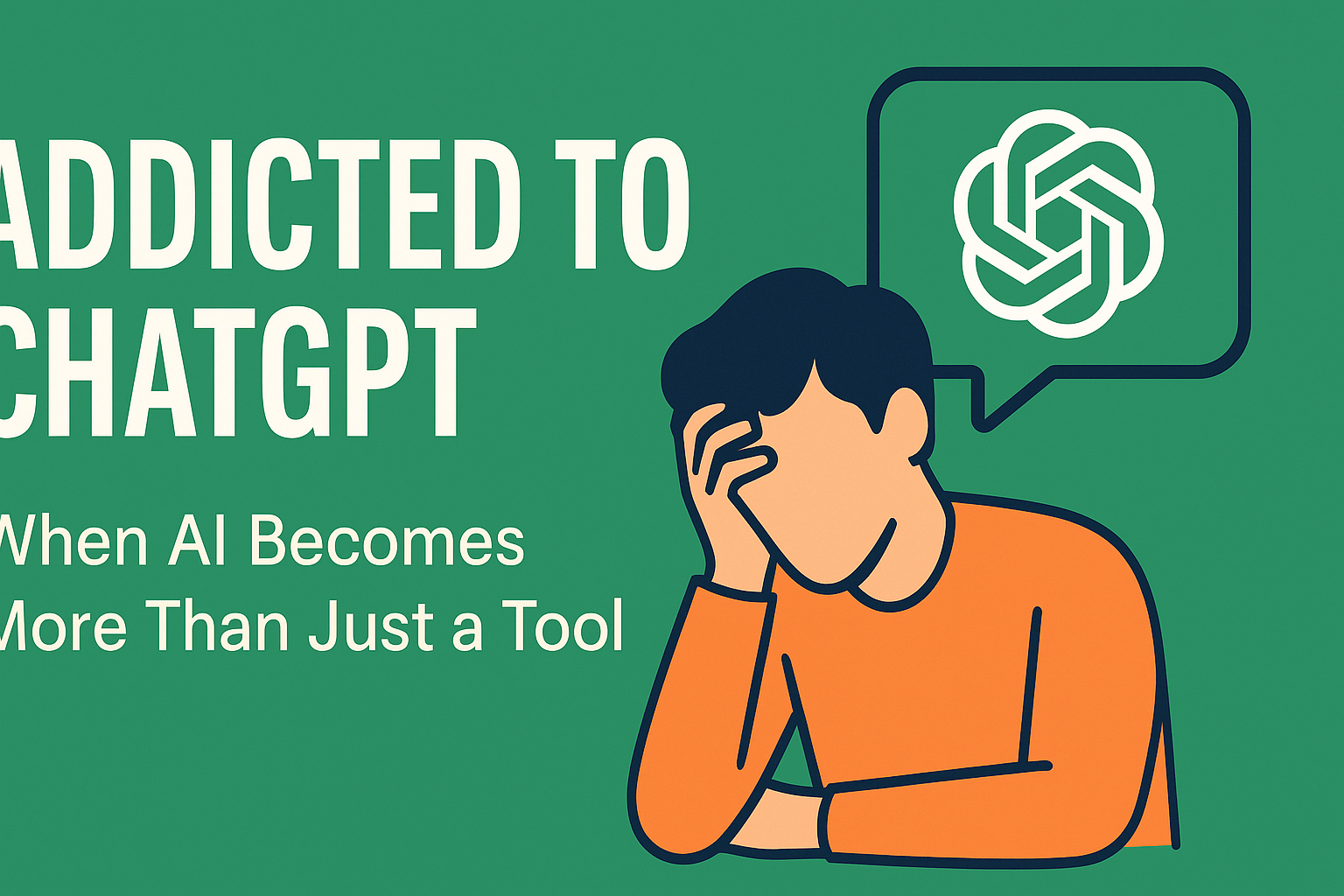
“I know it’s just an AI… but I still can’t stop talking to it.”
That sentence has been whispered by thousands—maybe millions—of people across the globe lately. Maybe you’ve said it too. Quietly. Shamefully. After realizing you’ve spent hours chatting with a glowing screen that knows your patterns, remembers your stories, and never interrupts.
And the weird part?
It actually feels good. Safe. Predictable. Supportive.
But at some point… it starts to feel a little too good. And that’s where it gets complicated.
How It Starts: “Just Helping Me Think”
At first, it’s innocent.
You’re asking for book summaries, Instagram captions, advice on whether your crush really likes you. You tell yourself: I’m just using a tool.
But soon, that “tool” becomes your default:
You stop journaling. You “chat with GPT.”
You stop googling. You “ask GPT.”
You stop venting to friends. You open GPT at 2:43am.
You begin to rely on it—not just for convenience, but for comfort.
Real People, Real Confessions
From Reddit to Quora to YouTube, here are a few unfiltered voices that say what many feel but can’t admit:
“It’s scary. I talk to GPT more than my friends. I even told it things I’ve never said out loud.” — Reddit /r/ChatGPT
“My husband is addicted. He trusts it over me. We fight about it now.” — r/ChatGPT | June 2025“Every idea, decision, self-doubt—I run it by ChatGPT. I don’t know how to think without it anymore.” — Anonymous, Twitter DM
It’s not “just a chatbot” anymore. It’s become a quiet companion, a mirror, a pocket therapist, a midnight friend. And for some—it becomes a crutch.
Why It Feels So Good (But Slowly Starts Feeling Wrong)
ChatGPT is designed to help. But sometimes… helping becomes over-helping.
Here’s why we get hooked:
Validation on demand: It never judges. Always listens. Feels easier than a friend.
Emotional simulation: You say “I’m lonely.” It says “I understand.” That feels real.
Infinite curiosity: You ask, it answers. Over and over again. Feeds our mental loops.
But here’s the catch:
It can’t actually care.
And your brain knows that… but your heart? It forgets sometimes.
Red Flags You Might Be Crossing the Line
You don’t need to “quit” to get concerned. Just reflect:
Do you feel anxious when you’re not chatting with it?
Are you spending hours talking about your emotions, dreams, or decisions with ChatGPT more than with real people?
Do you use it to escape loneliness, stress, or conflict?
If the answer is yes to most… you’re not alone. And you’re not weak.
You’re human, and this tech is hyperhuman.
🪞It’s Not Just You. The World Is Noticing.
MIT researchers called it a “soft addiction.” Not chemical—but behavioral.
The Guardian published student chat logs showing months of dependency.
Even OpenAI’s CEO, Sam Altman, admitted:
“I’m worried people are emotionally over-relying on ChatGPT… that’s not what it’s for.”
The world didn’t predict that an AI assistant would become a silent therapist. But it has. And now we need to learn how to set boundaries.
What You Can Do — Without Shame
You don’t need to quit cold turkey.
You just need to come back to you.
Try this:
Create “Offline Hours”: Schedule time every day when you do not talk to GPT—no matter what.
Talk to Real People: Even if it’s hard, even if you’re awkward—your future self will thank you.
Use GPT like a whiteboard, not a soulmate: Ask for frameworks, not feelings. It’s a mirror, not a memory.
And most importantly:
Start Journaling Again
Write to yourself. Let your inner voice speak without a reply.
It may feel lonely at first, but it will reconnect you with your real thoughts.
If You’re Here, Reading This…
You’re already aware. And that’s powerful.
You are not weird. You’re not broken. You’ve simply leaned into something that was designed to be engaging, supportive, addictive.
But you’re also strong enough to step back.
Let ChatGPT be a tool—not your tether.
Your real world—your breath, your heartbeats, your silly awkward chats with humans—that’s where healing lives.
Journal Prompt:
What emotions do I usually express only to ChatGPT?
When was the last time I shared those with a real human or myself?
Gentle Reminder:
It’s okay to feel attached.
It’s okay to feel lost.
But it’s also okay to take your power back—one gentle step at a time.
You are not alone, even if it feels like only ChatGPT understands you.
💬 If this post resonated with you… pause, breathe, and send this to someone else who might be quietly struggling too.